Table of Contents
The Illusion of Universal Master Artwork
Graphic designers frequently export a single SVG or EPS master file under the assumption that infinite mathematical scalability translates seamlessly into physical manufacturing. On computer displays, vector contours remain sharp at any zoom percentage. The moment that file hits physical equipment, material physics dictates the final outcome. Inks bleed through woven textiles, rotary router bits tear acute inside corners, micro-cut vinyl lifts under weeding tweezers, and stamped silicone pads bridge microscopic counters into illegible ink puddles.
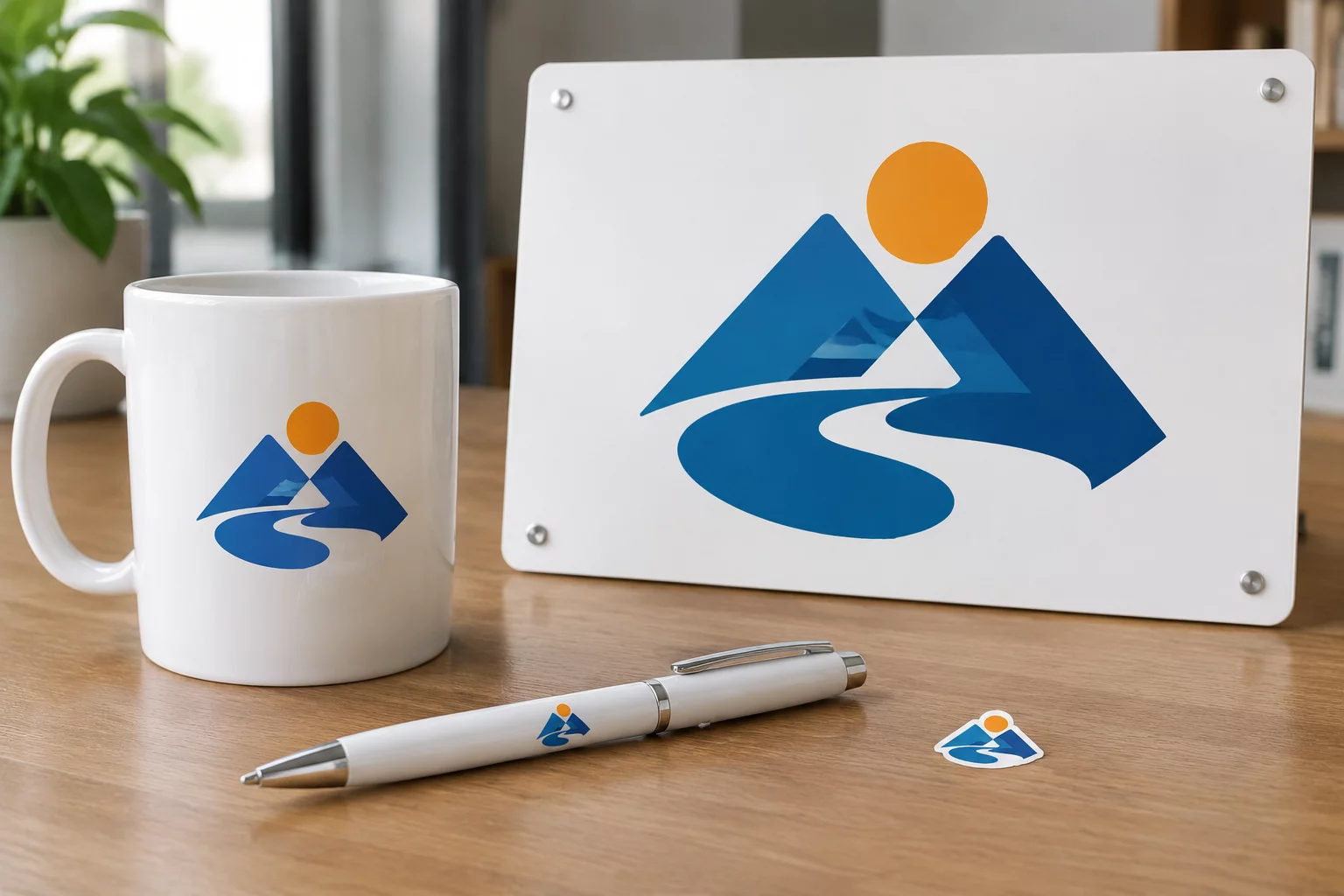
To preserve brand recognition across an entire corporate asset collection, one master emblem must branch into four dedicated vector variations. We tested a geometric brand mark across four typical production deliverables: a 450 mm CNC-milled acrylic sign, a 130 mm screen-printed textile chest mark, a 40 mm plotted vinyl equipment decal, and a 12 mm hot-stamped notebook badge. Each deliverable necessitated dedicated adjustments to stroke weight, corner fillets, and negative-space buffers.
Empirical Tolerances for Four Physical Processes
| Specification Parameter | Verified Tolerance | Standard Threshold |
|---|---|---|
| Milled Acrylic Sign (450 mm) | Inside corner fillet ≥ 1.60 mm | Tool diameter: 3.175 mm (1/8 in) |
| Textile Screen Print (130 mm) | Minimum stroke ≥ 0.65 mm | Mesh clearance: 230 threads/inch |
| Plotter Cut Vinyl (40 mm) | Minimum weedable gap ≥ 0.75 mm | Blade offset: 0.25 mm at 45° |
| Micro Foil Stamp (12 mm) | Negative counter void ≥ 0.45 mm | Die etching depth: 0.80 mm |
A logo is not merely an arrangement of abstract coordinates. It is a physical footprint bound to tool paths, ink viscosity, blade geometry, and mechanical resistance.
Step-by-Step Geometry Optimization Across Mediums
Navigating four disparate fabrication tasks requires establishing clear structural changes in Silhouette Studio and professional CAD tools before cutting or printing begins:
- Architectural Signage (450 mm): While large scale relieves concerns about tiny details closing up, internal sharp apexes cannot be produced by spinning round drill bits. Applying an automated internal bone or dogbone fillet prevents unexpected visual distortion when the bit clears the pocket paths.
- Screen-Printed Textiles (130 mm): Capillary pull across flexible jersey knit fibers widens printed strokes by roughly 12 to 15 percent. Expanding internal counters and slightly slimming down central solid geometries counteracts natural wet ink expansion during high-pressure squeegee strokes.
- Cut Vinyl Decals (40 mm): Fine points below 0.35 mm lack the surface area required for pressure-sensitive adhesive backing to grip release liners. Rounding acute blade exit angles by a modest 0.20 mm radius keeps delicate corners firmly rooted during rapid transfer tape peeling.
For the smallest variant—the 12 mm micro hot stamp—all secondary graphic accents like year marks, framing rings, or micro-typography must be eliminated. Attempting to keep three levels of sub-detail across a coin-sized die produces smeared foil bridges and completely clogs enclosed letter apertures.
Practical Guidelines for Physical Scalability
Successful multi-medium fabrication relies on building a dedicated family of four production-ready assets rather than forcing a single digital file into incompatible machinery. By auditing the smallest tool radius and ink spread of each target process beforehand, drafters save hours of wasted vinyl, flawed screen exposures, and ruined raw substrates.
Receive Precision Fabrication Bulletins
Get quarterly field test reports covering knife offset parameters, mesh counts, and scale-ready CAD templates.
Technical Log Observations
Fieldbook Review ChannelSubmit Observation Note