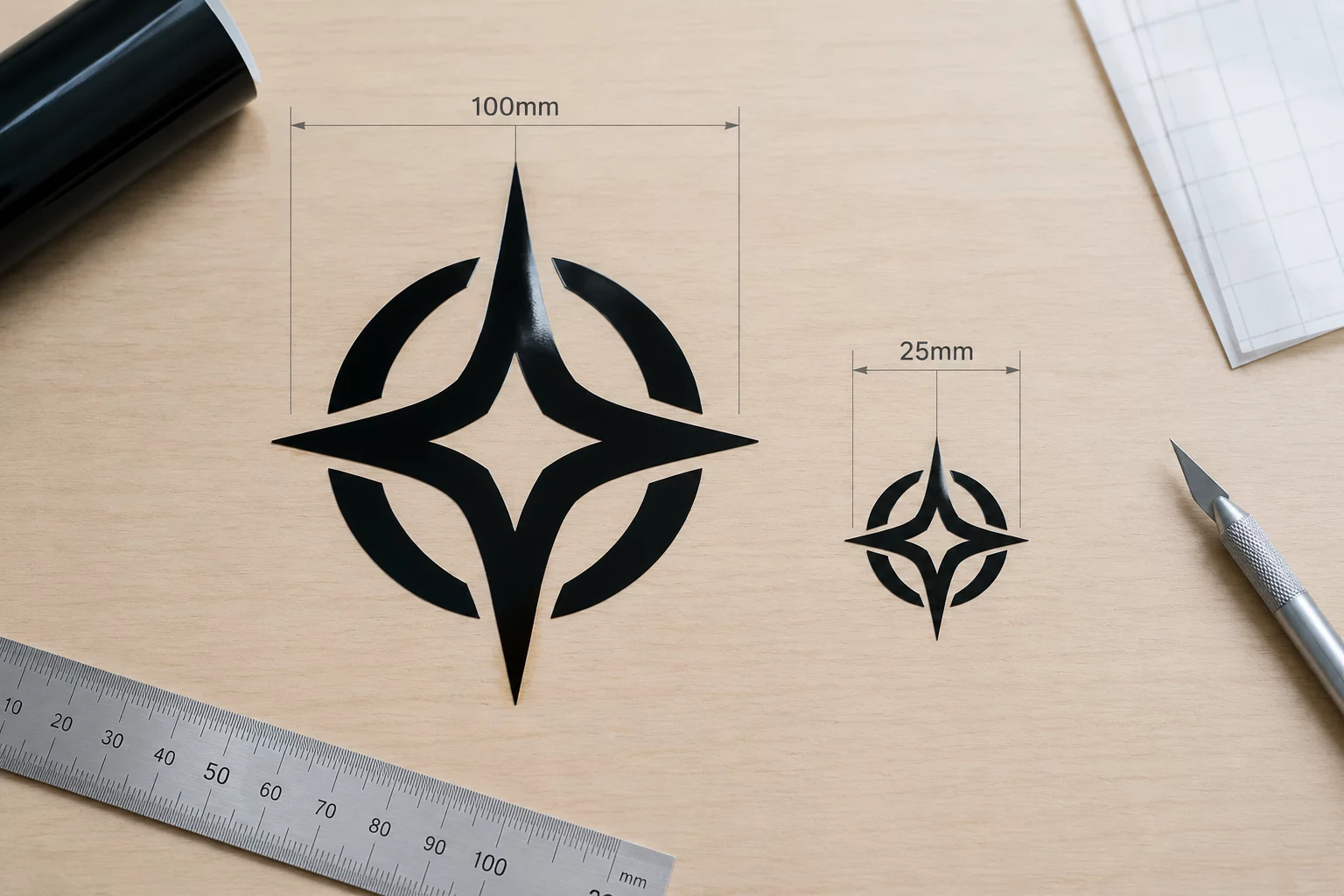
The Same Design at 100 mm and 25 mm
Analyzing how path tension, knife drag, and corner radius behave when a single vector geometry is reduced to a quarter of its original size.
Empirical vector stress tests, cut line tolerance thresholds, and design adjustments across 100 mm to 15 mm physical formats.
Documenting repeatable cutting challenges, line-weight bleed, and vector path calibrations observed during multi-scale production tests.
Analyzing how path tension, knife drag, and corner radius behave when a single vector geometry is reduced to a quarter of its original size.
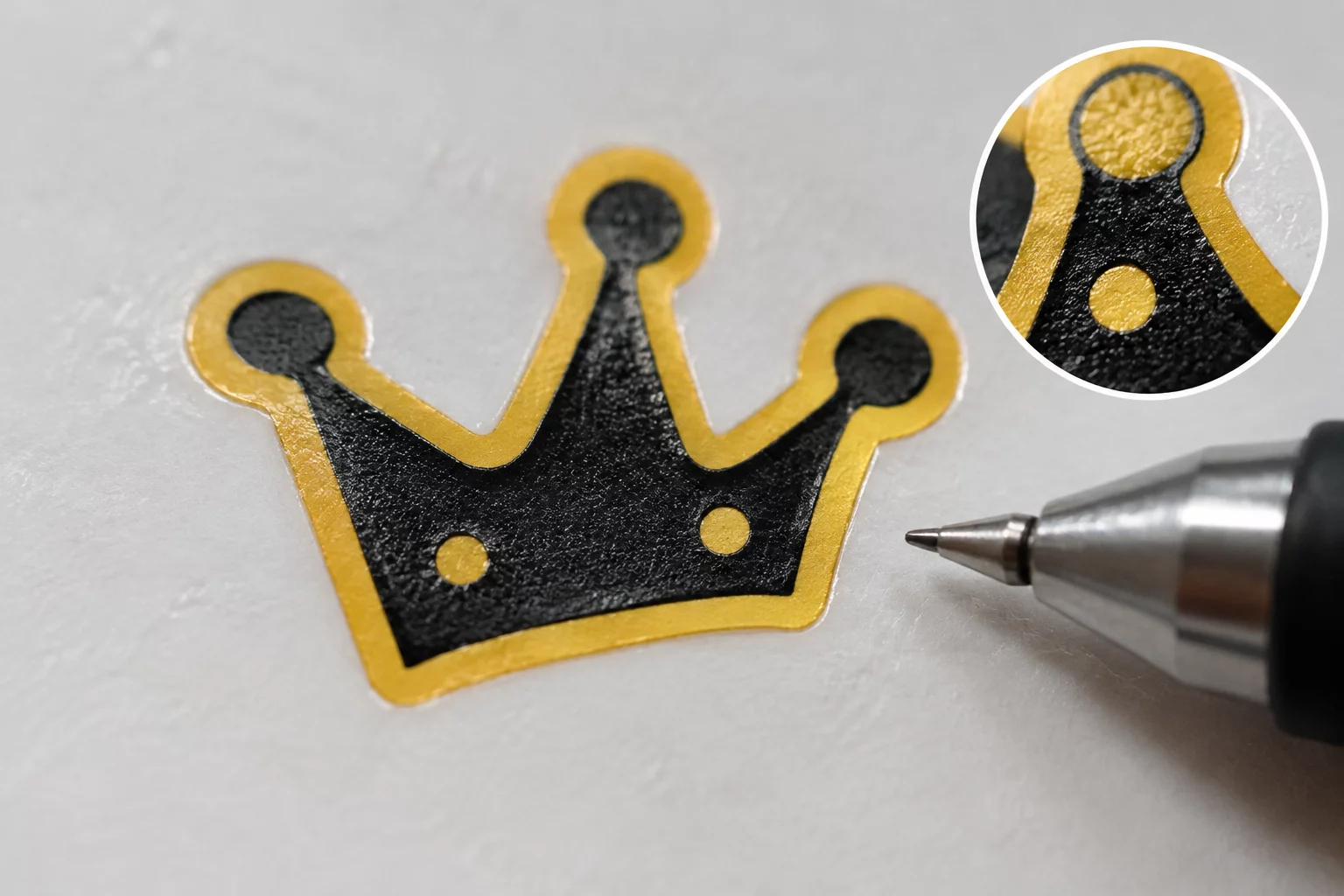
Why interior cutouts under 1.2 mm tear delicate vinyl backing and how collapsing closed paths into solid islands prevents failure.

Identifying baseline serifs and counter-spaces that fail cut fidelity, and calculating the minimum printable type height.
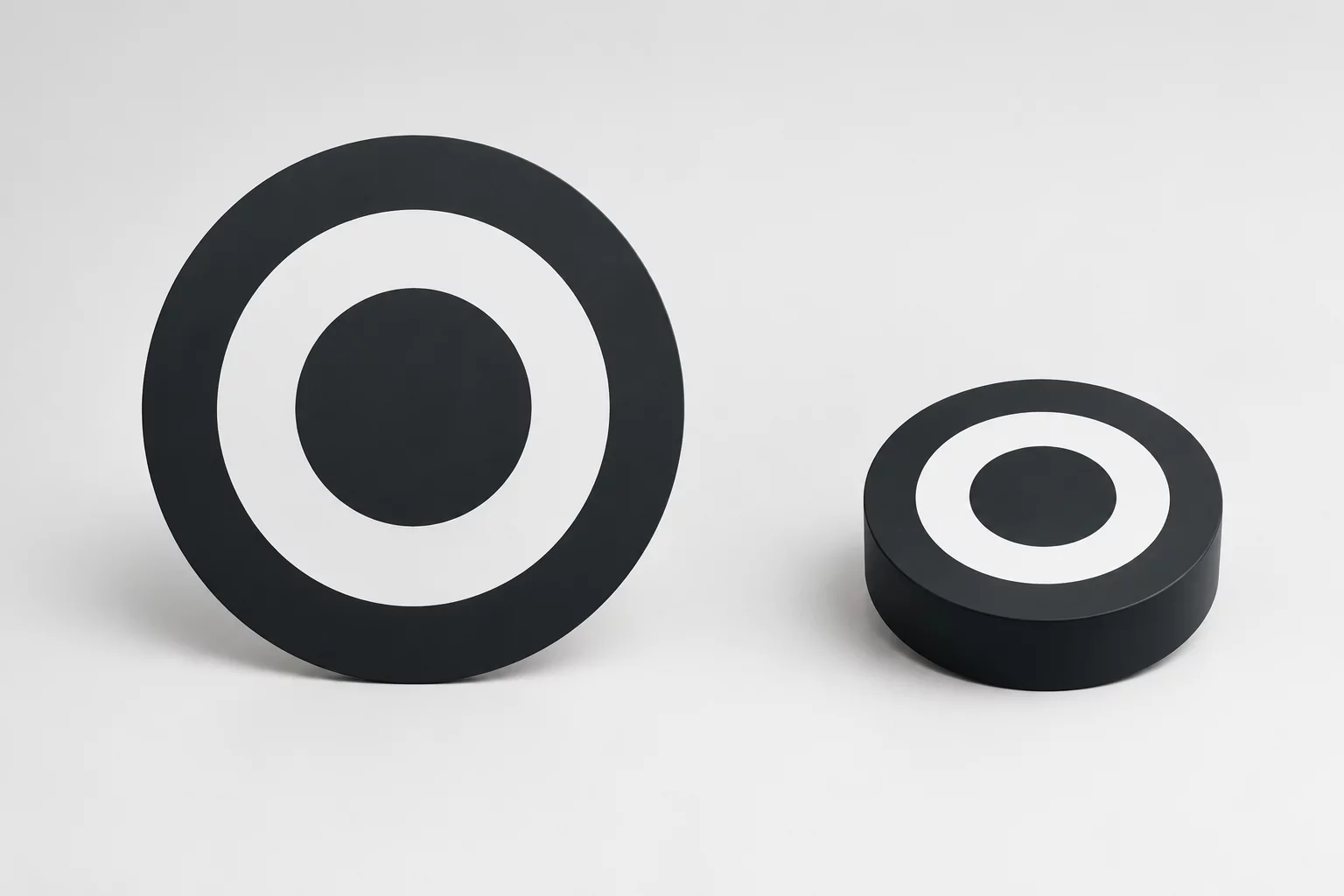
Compensating for visual slimming at reduced dimensions by adjusting stroke balance and outline weight manually.

A structured tiered framework establishing display, intermediate, and micro cut-safe asset variants.

Overcoming perimeter border crowding where perimeter lines visually crush internal negative space when shrunk.

Strategic simplification guidelines for knowing when micro geometry should be merged or deleted rather than scaled down.

Step-by-step vector treatment adapting a single emblem across large vinyl signage, heat transfer film, foil stamps, and micro labels.
No articles match your active filter criteria.
Scaling artwork linearly without compensating for tool tip diameter, blade offset, and medium tensile strength invariably causes peeling, lifting, and ripped corners. Our field records offer tangible rules for vector node reduction and gap retention.